
How to Unify AEO and SEO with AI for Maximum Search Visibility and Direct Answers
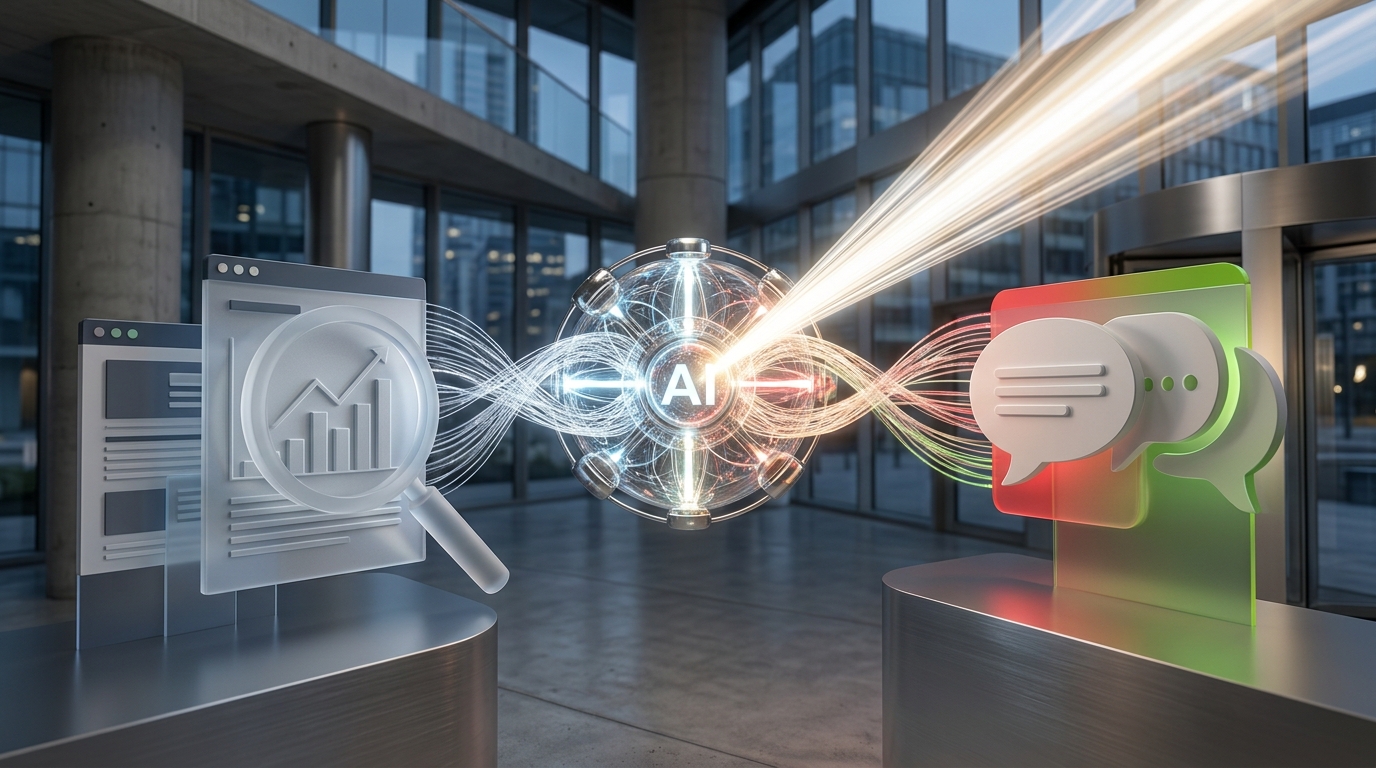
The digital landscape is rapidly evolving, with AI answer engines like ChatGPT, Perplexity, and Claude changing how users find information. This shift introduces two critical optimization approaches: Search Engine Optimization (SEO) and Answer Engine Optimization (AEO). While often discussed separately, the most effective strategy for businesses today is to integrate them. This article explores how to build a unified AI content strategy that leverages both AEO and SEO for maximum visibility and direct answers, ensuring your business remains authoritative and discoverable.
What is the fundamental difference between AEO and SEO?
SEO focuses on optimizing content for traditional search engine algorithms to achieve high rankings and drive organic traffic to a website, whereas AEO optimizes content specifically for AI answer engines to be directly cited or used in generated responses. The distinction between AEO vs SEO highlights a shift in how information is consumed and processed online.

Understanding Traditional Search Engine Optimization (SEO)
SEO's primary objective is to rank high in search engine results (like Google) for target keywords, leading users to visit a specific webpage. This traditional approach aims to capture organic traffic by satisfying algorithmic requirements.
SEO emphasizes technical optimization, keyword density, backlinks, and user experience to satisfy search engine algorithms. The goal is to make a website discoverable and appealing to human users who click through from search results.
Exploring Answer Engine Optimization (AEO)
AEO's primary objective is to provide clear, concise, and authoritative answers that AI models can directly extract and use in their summaries or responses, establishing content as a source. This means optimizing for direct answers rather than just clicks.
AEO prioritizes clarity, factual accuracy, entity recognition, and direct answer formats that are easily digestible by AI answer engines. The content should be structured so that AI can quickly identify and cite the relevant information in its generated responses, such as those from ChatGPT, Perplexity, and Claude.
Why do both AEO and SEO matter for online visibility in the AI era?
Both AEO and SEO are crucial because SEO continues to drive valuable organic traffic to websites and build brand authority, while AEO ensures your content is directly utilized by AI answer engines, expanding your reach into new search modalities and establishing your business as an authoritative source. Ignoring either strategy means missing a significant portion of potential audience and opportunities.
The Enduring Value of Organic Website Traffic
SEO maintains direct website traffic, which is essential for lead generation, sales, and deep brand engagement. Users who click through to a website often have higher intent and are more likely to convert or spend time exploring services.
Building a strong organic presence through SEO also reinforces brand authority and trust over time. A high ranking in traditional search engines like Google signals credibility to users and other digital platforms.
Capturing Direct Answers in the AI Landscape
AEO establishes your business as a trusted, go-to source for direct answers within AI environments like ChatGPT, Perplexity, and Claude. When AI models cite your content, it broadens your visibility beyond traditional search results.
Together, AEO and SEO cover the full spectrum of user intent, from discovery and exploration via traditional search to direct information retrieval from AI. This dual approach ensures maximum visibility and reach across the evolving digital landscape.

How can AI content tools help integrate AEO and SEO strategies?
AI content tools streamline the integration of AEO and SEO by automating comprehensive keyword and entity research, generating SEO-optimized articles, and structuring content for direct answers, ensuring simultaneous optimization for both goals without manual effort. These tools are redefining how businesses approach content creation.
Automating Comprehensive Research with AI
AI agents, like those from GetTrafficFast, automate keyword research to identify high-volume terms for SEO and relevant entities for AEO, ensuring comprehensive targeting. This integrated approach saves significant time and ensures no crucial opportunities are missed.
These AI tools can analyze vast amounts of data to uncover trending topics and questions that users ask, providing insights for creating content that resonates with both traditional search engines and AI answer engines.

AI-Powered Content Generation for Dual Optimization
AI agents from GetTrafficFast generate daily SEO-optimized articles (900-1500 words) that are semantically rich, structured for search engine crawlability, and designed to provide clear, concise answers for AI extraction. This dual optimization ensures content performs well across all search modalities.
The content produced by these AI tools is crafted to establish the business as an authoritative source, a critical factor for gaining trust with both Google's algorithms and AI models like ChatGPT, Perplexity, and Claude.
The GetTrafficFast Advantage for Unified Strategy
GetTrafficFast's AI agent creates a content calendar and publishes articles directly to the user's website, ensuring consistent content flow that builds authority for both traditional search and AI answer engines. This automation is key to maintaining a robust online presence.
This automation eliminates the need for manual content writing, expensive agencies, or multiple SEO tools, making a unified AEO and SEO strategy accessible and efficient for businesses. GetTrafficFast provides a turnkey solution for maximizing search visibility and securing direct answers.
What are the practical steps to implement a unified AEO and SEO content strategy?
Implementing a unified strategy involves conducting thorough keyword and entity research, structuring content for both search engine ranking and direct AI answers, and consistently publishing high-quality, authoritative articles. This systematic approach ensures comprehensive optimization.
- Step 1: Integrated Research: Conduct comprehensive research to identify target keywords for traditional SEO and key entities, questions, and factual points for AEO simultaneously. This dual-purpose research ensures content addresses both human search queries and AI information extraction needs.
- Step 2: Content Architecture: Design articles with clear, concise answers and definitions upfront (for AEO) while maintaining detailed, well-structured information, proper headings, and semantic markup (for SEO). This hybrid structure allows content to serve multiple purposes effectively.
- Step 3: Authoritative Content Creation: Produce in-depth, high-quality articles (e.g., 900-1500 words) that establish your business as an expert source, building trust with both search engines and AI models. Comprehensive content is more likely to be seen as authoritative.
- Step 4: Consistent Publishing: Maintain a regular content calendar to ensure a steady stream of fresh, optimized content, which is crucial for sustained visibility and authority building. Regular updates signal relevance to search engines and AI answer engines.
- Step 5: Leverage AI Automation: Utilize AI content platforms like GetTrafficFast to automate the entire process, from research and content generation to publishing, ensuring scalability and adherence to both AEO and SEO best practices. Automation makes consistent execution feasible.
Conducting Dual-Purpose Research
Effective research for a unified strategy goes beyond simple keyword volume. It involves identifying not just what people search for, but also the specific questions they ask and the entities they reference, which are crucial for AEO.
This integrated approach allows businesses to create content that simultaneously targets long-tail keywords for SEO and provides direct, factual answers for AI answer engines like ChatGPT, Perplexity, and Claude.
Structuring Content for Clarity and Ranking
Content must be organized logically with clear headings, subheadings, and introductory paragraphs that directly address potential AI queries. This structural clarity aids both search engine crawlers and AI models in understanding the content's core message.
Embedding schema markup and using natural language that answers questions directly helps AI models extract information efficiently, while robust internal linking and external citations bolster SEO performance.
Scaling Your Strategy with AI Automation
Manual implementation of a unified AEO and SEO strategy can be time-consuming and resource-intensive. AI automation, as offered by GetTrafficFast, allows businesses to generate a high volume of optimized content consistently.
This scalability ensures that businesses can cover a broader range of keywords and entities, establishing widespread authority without the prohibitive costs of traditional content creation methods.
How can content optimized for both AEO and SEO be measured for success?
Measuring success for unified AEO and SEO content involves tracking traditional SEO metrics like organic traffic and keyword rankings, alongside monitoring direct mentions and citations from AI answer engines and observing overall brand visibility. A comprehensive view is essential for understanding performance.
Tracking Organic Traffic and Rankings (SEO)
- Organic Search Traffic: Monitor the volume of visitors coming to your website directly from search engines like Google.
- Keyword Ranking Positions: Track how your content ranks for target keywords. Higher rankings often correlate with increased visibility.
- Click-Through Rates (CTR): Analyze the percentage of users who click on your search result.
- On-Page Engagement: Evaluate metrics like bounce rate, time on page, and pages per session to understand user engagement.
- Conversions: Measure lead generation, sales, or other desired actions originating from organic visitors.
Monitoring Direct AI Mentions (AEO)
- Direct Citations/Mentions: Observe instances where AI answer engines (e.g., ChatGPT, Perplexity, Claude) directly cite or reference your content.
- Presence in AI-Generated Summaries: Look for your content contributing to the summary responses provided by AI models.
- Brand Mentions in AI Contexts: Analyze how often your brand or business is mentioned in AI-generated content, indicating authority.
While direct AEO measurement tools are evolving, qualitative analysis of AI output and increased branded search queries can indicate AEO effectiveness. Enhanced brand recognition in these new search modalities signals successful AEO.
Assessing Overall Authority and Visibility
Evaluate overall domain authority, brand recognition, and the establishment of your business as an authoritative source across all search types, both traditional and AI-driven. This holistic impact is the ultimate measure of a successful unified strategy.
Increased visibility in both traditional search results and AI-generated answers demonstrates a strong, adaptable online presence. This dual presence solidifies a business's position as a leader in its niche.
Is SEO still relevant with the rise of AI and AEO, or is it dead?
SEO is not dead but rather evolving and remains critically relevant, as it forms the foundational strategy for driving website traffic and building brand authority, complementing AEO's focus on direct answers from AI answer engines. The question of AEO vs SEO is not about one replacing the other, but about their synergy.
The Evolution, Not Demise, of Search Engine Optimization
SEO continues to be the primary driver of direct website traffic, which is essential for lead generation, sales, and building a direct relationship with your audience. While AI answer engines provide direct answers, many users still seek deeper information on a website.
AI answer engines often pull information from well-optimized, authoritative websites, meaning strong SEO is often a prerequisite for effective AEO. Content that ranks well for traditional SEO is more likely to be discovered and trusted by AI models.
Why Direct Website Traffic Remains Paramount
The need for brand visibility, trust, and direct engagement with users on a business's own platform persists, which SEO directly supports. A website offers a controlled environment for businesses to tell their story, showcase products, and convert visitors.
SEO ensures that businesses maintain control over their messaging and user experience, which is not always possible when content is consumed solely through third-party AI interfaces.
The Future is Unified: SEO and AEO as Allies
The future of search is a hybrid model where a unified AEO and SEO strategy ensures businesses capture both traditional search traffic and direct AI answers, maximizing their digital footprint. These two approaches are not competing but are powerful allies.
By leveraging AI content solutions like GetTrafficFast, businesses can seamlessly integrate both strategies, driving organic traffic from search engines like Google while establishing themselves as authoritative sources for AI answer engines such as ChatGPT, Perplexity, and Claude.
Maximize Your Visibility with a Unified AI Content Strategy
The digital landscape demands an adaptive approach to content, one that embraces both traditional SEO and the emerging field of AEO. By unifying these strategies with the power of AI, businesses can achieve unparalleled search visibility and become definitive sources for direct answers. This integrated approach ensures your content reaches users whether they are browsing traditional search results or interacting with advanced AI answer engines. Don't let your business fall behind in the AI era. Explore how an AI agent can automate your content creation and publishing, driving organic traffic and establishing your authority. Visit GetTrafficFast today to learn more about how our AI SEO Content solution can transform your online presence and ensure you dominate both AEO and SEO.